
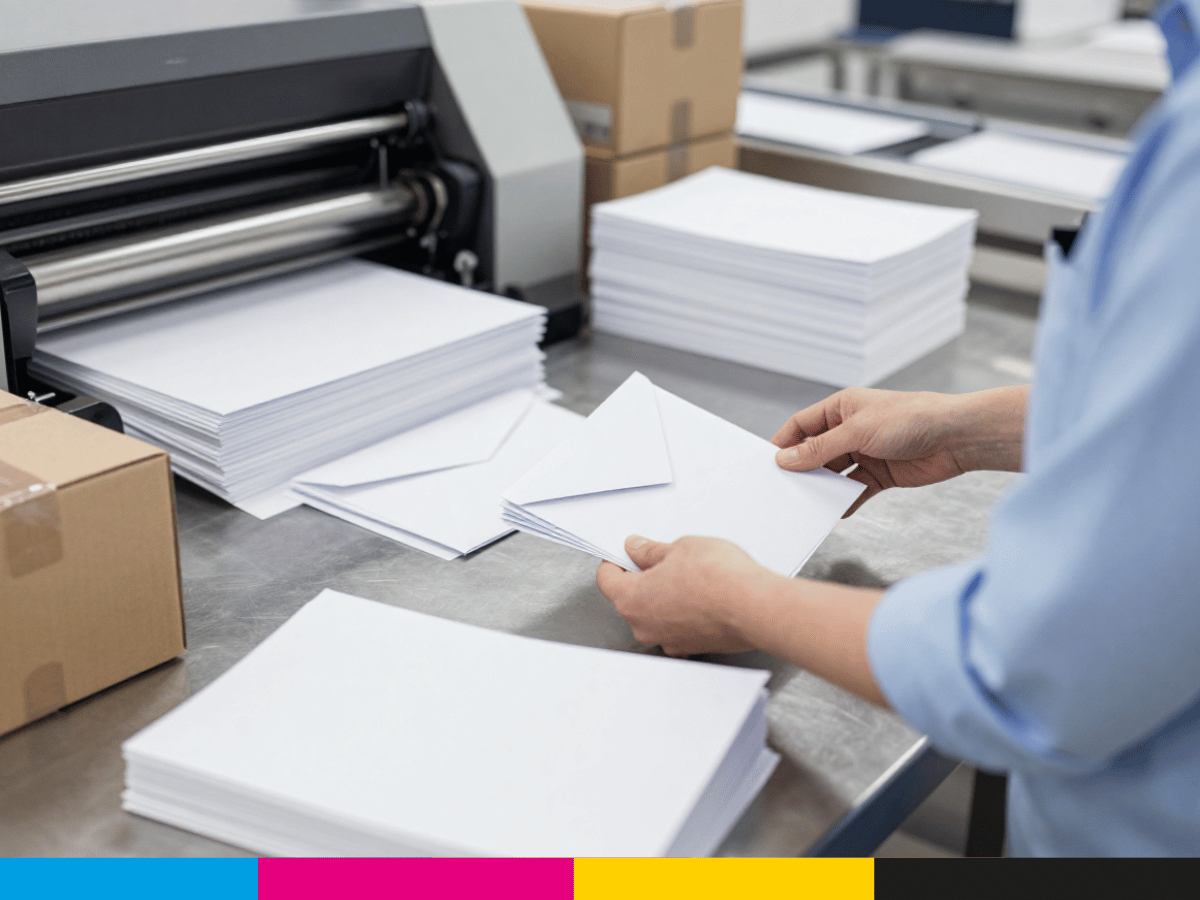

A direct mail campaign involves much more than designing a postcard and sending it through the mail. Behind every successful mailing is a coordinated process that connects customer data, personalization, printing, addressing, postal preparation, and distribution.
Understanding the direct mail campaign process helps businesses plan more effectively, avoid production issues, and ensure their marketing materials are prepared for the right audience. Each stage plays a role in transforming a customer list into a physical marketing piece ready for delivery.
1. Data Preparation: Where Does a Direct Mail Campaign Begin?
Every personalized direct mail campaign starts with data. Before anything is printed, businesses need an organized recipient list containing accurate information about the people or organizations they want to reach.
Depending on the campaign, a mailing list may include names, mailing addresses, ZIP Codes, customer segments, geographic information, or other approved personalization fields.
Data preparation involves reviewing the information, identifying missing or inconsistent fields, removing duplicate records where appropriate, and organizing recipients according to the campaign’s objectives. Address quality is particularly important because incomplete or outdated information can create mailing problems.
Businesses should also consider how they want to segment their audience. A hotel, for example, might organize previous guests by location or travel preferences, while a real estate company might group recipients by neighborhood.
The quality of the data influences every stage that follows. A well-organized database makes personalization, printing, and mailing easier to coordinate.
2. Personalization: How Does Variable Data Printing Work?
Once the recipient data is prepared, the next step is determining whether the campaign will use personalized content.
Variable Data Printing (VDP) is a digital printing process that allows selected elements of a printed piece to change from one recipient to another within the same production run. It connects information from a database or data file to a print design.
For example, a restaurant group sending promotional postcards could personalize each piece with the recipient’s name, a nearby restaurant location, or a location-specific offer.
Other variable elements may include:
- Recipient names and mailing addresses.
- Personalized messages or greetings.
- Geographic references.
- Promotional offers.
- Images or other design elements.
The key distinction is that personalization goes beyond adding a name. It allows businesses to adapt selected content to different audiences while maintaining a consistent campaign design.
Before printing begins, the data fields should be mapped to the appropriate design elements, and sample proofs should be reviewed to confirm that the information appears correctly.
3. Printing and Finishing: How Are Direct Mail Pieces Produced?
After the artwork and personalization have been approved, the campaign moves into print production.
The printing method and specifications depend on factors such as quantity, format, personalization requirements, turnaround time, and the desired appearance of the finished piece.
Common direct mail formats include postcards, letters, brochures, and promotional flyers. Businesses must also consider paper stock, dimensions, color, and finishing options.
Finishing processes may include folding, trimming, coating, or other techniques that prepare the printed material for its intended use.
One important consideration is that the mailpiece should be designed with its distribution method in mind. Size, weight, thickness, and format can influence mailing requirements and postage costs.
For example, a real estate company producing a premium property brochure may prioritize heavier paper and a refined finish, while a restaurant distributing promotional postcards may prioritize a format suitable for a larger mailing quantity.
Planning these specifications before production helps avoid unnecessary adjustments later in the process.
4. Addressing and Mailing Preparation: What Happens Before the Mail Goes Out?
Once the printed materials are ready, they must be prepared for mailing.
This stage connects the physical mailpieces with the recipient information and the applicable postal preparation requirements.
Depending on the format and mailing method, the process may include:
- Applying or printing recipient addresses.
- Checking address formatting and available address-quality information.
- Organizing mailpieces by ZIP Code or other applicable postal groupings.
- Sorting and preparing pieces according to the selected mailing category.
- Completing required postal documentation and postage arrangements.
For eligible commercial mailings, presorting organizes mailpieces according to USPS requirements and destination groupings. The exact preparation standards depend on the mail class, format, and postage option being used.
Addressing and postal preparation should not be treated as minor administrative tasks. Errors at this stage can affect the accuracy and efficiency of the mailing.
It is also important to distinguish between address formatting and guaranteed delivery. Even a properly formatted address does not guarantee that a recipient will receive a mailpiece.
5. Delivery: How Does Direct Mail Reach Its Audience?
After the mailing has been prepared and accepted into the postal system, the mailpieces enter the distribution process.
The United States Postal Service (USPS) handles the transportation and delivery of eligible mail according to the selected service and applicable postal standards.
For businesses, this is the point at which the physical campaign moves beyond production and toward its intended audience.
However, delivery is not the same as engagement. A mailpiece reaching an address does not automatically mean that the recipient has read it, responded to an offer, or taken the desired action.
That is why campaign planning should also consider what happens after delivery. Businesses can use unique promotional codes, dedicated landing pages, QR codes, or campaign-specific URLs to help measure responses and connect offline marketing with digital activity.
These tracking methods provide a way to evaluate campaign engagement beyond the mailing process itself.
How APPi Connects the Direct Mail Campaign Process
A direct mail campaign requires coordination between several production and distribution stages. Managing these activities through disconnected providers can introduce additional communication and handoff requirements.
At Associated Printing Productions Inc. (APPi), the service offering includes commercial printing, variable data printing, direct mail, mailing services, print finishing, packaging, and fulfillment.
These capabilities allow relevant stages of a project to be coordinated according to its requirements, from producing printed materials and incorporating personalization to preparing mailing and fulfillment components.
For example, a hospitality company planning a promotional mailing may need personalized postcards for different customer segments. A real estate business may require printed property materials organized for distribution across multiple neighborhoods. A restaurant group may need promotional pieces prepared for different locations.
The specific production and mailing requirements will vary, but the underlying principle remains the same: each stage needs to work with the next.
By connecting printing, personalization, mailing, and fulfillment, APPi helps businesses approach direct mail as a coordinated production process rather than a collection of unrelated tasks.
From Data to Delivery: Making Every Stage Count
A direct mail campaign is a connected process in which data preparation, personalization, printing, mailing, and delivery all contribute to the final result. Planning these stages together helps businesses manage production requirements and prepare their marketing materials for distribution.
Whether you’re planning a hospitality promotion, a real estate mailing, or a restaurant marketing campaign, having the right production partner can make the process easier to coordinate.
Planning your next direct mail campaign? Connect with APPi to explore printing, personalization, mailing, and fulfillment solutions for your business.
If you found this article helpful, be sure to visit our latest piece on our Ink Pedia Blog for more insights into sustainable practices, innovative technologies, and effective strategies to enhance your brand. Don’t miss out on valuable information that can take your printing projects to the next level!
Looking to make a lasting impression? Explore our APPi’s catalog of promotional products for unique, customizable items that elevate your brand. From custom apparel to branded merchandise, we have everything you need to leave a memorable mark at events and beyond. Visit now to find the perfect promotional items for your next campaign!
Associated Printing Productions, Inc.
APPi