
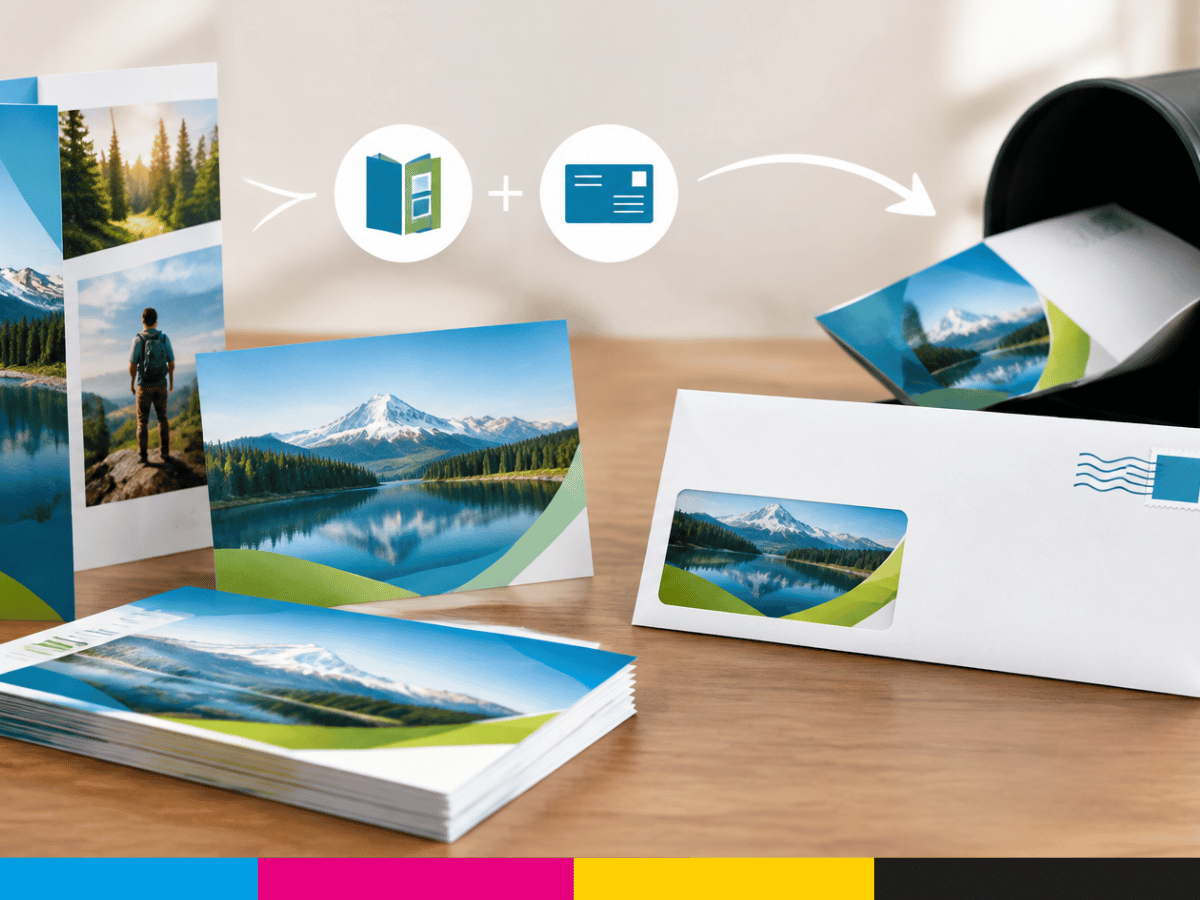

Businesses often approach print projects as separate tasks: one vendor handles design and printing, another manages personalization, and a third coordinates mailing or fulfillment. While this approach may work for individual projects, managing multiple providers can create unnecessary complexity, communication gaps, and production challenges.
An integrated print and direct mail partner brings these services together under a coordinated workflow. Instead of managing separate vendors for every stage, businesses can work with one provider that connects commercial printing, variable data printing, mailing services, and fulfillment.
The difference goes beyond convenience. When these processes are coordinated, businesses have a clearer view of how their printed materials move from production to delivery, making it easier to maintain consistency, manage campaign requirements, and support marketing objectives.
For companies in hospitality, real estate, restaurants, and other customer-facing industries, this integrated approach can make print and direct mail programs easier to manage and execute.
What Is an Integrated Print and Direct Mail Solution?
An integrated print and direct mail solution combines multiple services into a connected production and distribution process.
Rather than treating printing, personalization, mailing, and fulfillment as independent activities, an integrated approach coordinates them around the same project requirements, timelines, and delivery objectives.
Depending on the project, this process may include:
- Commercial printing: Producing brochures, catalogs, postcards, flyers, business materials, and other marketing collateral.
- Variable data printing (VDP): Personalizing printed materials using information from a customer or prospect database.
- Print finishing: Applying additional production techniques, such as folding, binding, coating, cutting, or other finishing options.
- Mailing services: Preparing and coordinating printed materials for postal distribution.
- Fulfillment: Managing the assembly, packaging, and distribution of printed materials, marketing kits, or promotional items.
- Packaging: Producing and preparing printed packaging materials that support product presentation and brand consistency.
The specific combination depends on the campaign. A direct mail postcard, for example, may require printing, personalization, addressing, and mailing. A multi-location marketing campaign may also involve packaging, kitting, and fulfillment.
The central idea is simple: each service should work as part of the same process rather than as an isolated production task.
Why Should Businesses Work With One Print and Direct Mail Partner?
Managing multiple vendors can introduce additional coordination requirements. Every handoff creates another opportunity for information to be delayed, specifications to be misunderstood, or production schedules to become misaligned.
Working with one integrated provider can help businesses address these challenges in several ways.
- Better Coordination Across the Production Process
When printing, personalization, mailing, and fulfillment are managed through a coordinated workflow, the different stages can be planned together.
For example, a direct mail campaign involves more than printing a postcard. The finished piece must also accommodate its mailing format, recipient information, postal requirements, and distribution plan.
If these elements are considered only after printing is complete, businesses may encounter avoidable adjustments or delays.
An integrated approach allows production and distribution requirements to be considered earlier, helping teams align specifications before the project moves forward.
- More Consistent Brand Communication
Brand consistency is especially important when businesses communicate with customers across multiple locations, campaigns, or marketing channels.
An integrated print partner can help coordinate the production of different materials while maintaining consistent brand elements, including:
- Colors and visual identity.
- Typography and design standards.
- Messaging and campaign themes.
- Paper and finishing selections.
- Printed materials across different formats.
For businesses producing brochures, postcards, promotional materials, and packaging as part of the same campaign, coordinated production can help maintain a recognizable brand experience.
- A More Connected Personalization Strategy
Personalization is not simply adding a recipient’s name to a printed piece. It involves using relevant information to make the communication more meaningful to its intended audience.
Variable data printing makes this possible by allowing selected elements of a printed piece to change based on information in a data file.
For example, a business could create different versions of a direct mail piece based on:
- Geographic location.
- Customer or prospect segment.
- Previous interactions.
- Product or service interests.
- Location-specific offers.
When variable data printing is connected to the mailing process, the personalized materials can be prepared as part of the same campaign workflow.
This creates an opportunity to coordinate the message, printed format, recipient information, and distribution requirements from the beginning.
- Clearer Project Management and Communication
Every additional vendor involved in a print campaign creates another relationship to coordinate.
Businesses may need to communicate the same specifications, deadlines, artwork changes, and production requirements to several providers.
An integrated partner can provide a more centralized point of coordination across the services included in a project.
This does not eliminate the need for approvals or project management. However, it can simplify communication by reducing the number of separate production relationships a business needs to manage.
- Better Visibility From Production to Delivery
A printed marketing piece is not finished simply because it comes off the press.
Depending on the project, it may still need finishing, personalization, inserting, packaging, sorting, mailing, or distribution.
When these activities are planned together, businesses can establish a clearer understanding of the production sequence and the requirements of each stage.
This is particularly useful for campaigns with multiple versions, different recipient groups, several delivery destinations, or recurring production needs.
How Do Printing, Personalization, Mailing, and Fulfillment Work Together?
An integrated print and direct mail workflow connects several stages that are often managed separately.
Understanding how these services relate to one another helps businesses identify where coordination matters most.
Step 1: Define the Campaign and Its Requirements
The process begins by identifying the campaign objective, target audience, printed materials, quantities, and distribution requirements.
Important questions include:
- Who will receive the materials?
- What action should the recipient take?
- Will everyone receive the same message?
- Are materials being mailed, distributed at locations, or shipped?
- Are there specific delivery dates or campaign deadlines?
These decisions influence the printing format, personalization requirements, and fulfillment plan.
Step 2: Prepare the Artwork and Select the Print Specifications
Once the project requirements are established, the next step is preparing the artwork and selecting the appropriate production specifications.
These may include:
- Print format and dimensions.
- Paper stock and weight.
- Color requirements.
- Folding and binding.
- Coating or other finishing options.
- Quantity and production method.
The right specifications depend on the intended use, visual requirements, budget, and distribution method.
For example, a premium real estate brochure may require a different paper stock and finishing approach than a high-volume promotional postcard.
Step 3: Incorporate Personalization When Needed
If the campaign requires personalized communication, variable data printing can connect approved information from a data file to specific elements of the printed design.
The data may determine recipient names, geographic references, promotional messages, images, or other approved content.
Before production, businesses should review the data structure, confirm the accuracy of recipient information, and approve representative proofs.
Data quality is particularly important. Incorrect or incomplete information can affect both the appearance of the printed piece and the accuracy of its delivery.
Step 4: Complete Printing and Finishing
The materials move into production according to the approved specifications.
After printing, finishing processes may be required to prepare the pieces for their intended use.
Depending on the project, this can include folding, trimming, binding, coating, or other finishing techniques.
These details should be considered early because the format and finishing choices can affect how materials are handled, packaged, or mailed.
Step 5: Coordinate Mailing and Fulfillment
The final stage depends on how the materials will reach their recipients.
For direct mail campaigns, mailing preparation may include addressing, sorting, and organizing pieces according to applicable postal requirements.
For projects involving multiple materials or destinations, fulfillment may also include:
- Assembling marketing kits.
- Inserting printed materials into envelopes or packages.
- Organizing materials by location or recipient group.
- Packaging promotional items.
- Preparing shipments for distribution.
The objective is to connect the finished printed product with its intended destination.
Which Industries Benefit From Integrated Print and Direct Mail?
An integrated approach can support businesses that rely on printed communication, recurring campaigns, location-based marketing, or coordinated distribution.
Three industries where this model can be particularly relevant are hospitality, real estate, and restaurants.
Hospitality: Coordinating Guest Communication and Brand Experience
Hotels, resorts, and hospitality groups use printed materials throughout the customer journey.
Examples include:
- Welcome materials and guest information.
- Promotional brochures and destination guides.
- Seasonal offers and special event invitations.
- Loyalty program communications.
- Direct mail campaigns for previous guests.
For businesses operating multiple properties or locations, coordinating these materials can help maintain brand consistency while allowing certain messages to reflect local offerings.
An integrated workflow can bring together the printing, personalization, and distribution requirements of these campaigns.
Real Estate: Supporting Property Marketing and Lead Generation
Real estate businesses frequently depend on printed materials to promote properties, developments, and local market opportunities.
Common applications include:
- Property brochures and presentation folders.
- Postcards announcing new listings.
- Neighborhood farming campaigns.
- Open house invitations.
- Development and community marketing materials.
- Direct mail campaigns targeting specific geographic areas.
Variable data printing can also support location-based personalization, allowing businesses to adapt selected messages or information to different neighborhoods or audiences.
For example, a real estate company promoting several developments could use a coordinated production process to create different marketing versions while maintaining consistent brand standards.
Restaurants: Supporting Local Marketing and Promotional Campaigns
Restaurants and restaurant groups use print to communicate promotions, reinforce brand identity, and connect with local customers.
Printed materials may include:
- Menus and promotional inserts.
- Direct mail coupons and offers.
- Grand opening announcements.
- Seasonal campaign postcards.
- Catering brochures.
- Loyalty and event communications.
- Branded packaging and promotional materials.
For restaurant groups with multiple locations, coordinated printing and fulfillment can help organize campaign materials by location and support consistent execution across the business.
What Should Businesses Consider When Choosing a Print and Direct Mail Partner?
Not every commercial printer offers the same range of services. Some specialize in production, while others focus on mailing, promotional materials, or fulfillment.
Before choosing a provider, businesses should evaluate whether its services align with the actual requirements of their projects.
Here are six important considerations:
- Range of services
Can the provider support the different stages of the project, including commercial printing, variable data printing, finishing, mailing, and fulfillment?
- Experience with integrated workflows
Does the provider understand how production requirements affect mailing, packaging, and distribution?
- Personalization capabilities
Can the provider support the type of variable content required by the campaign? What data preparation and proofing steps are needed?
- Production flexibility
Can the provider accommodate different print formats, quantities, paper stocks, finishing options, and packaging requirements?
- Communication and project coordination
Will the business have a clear point of contact and an established process for reviewing artwork, approving proofs, and managing production requirements?
- Distribution and fulfillment requirements
Can the provider support the intended delivery method, recipient groups, packaging requirements, and project schedule?
The best partner is not necessarily the one offering the largest service list. It is the one whose capabilities and processes align with the complexity and objectives of the business’s print and direct mail projects.
How APPi Connects Commercial Printing and Direct Mail Services
At Associated Printing Productions Inc. (APPi), the focus goes beyond producing individual printed materials.
APPi offers commercial printing, direct mail, variable data printing, mailing services, fulfillment, packaging, print finishing, and large-format printing.
These capabilities support an integrated approach in which printing and related services can be coordinated according to each project’s requirements.
For businesses planning marketing campaigns, this means the conversation can extend beyond the printed piece itself to consider how it will be personalized, prepared, packaged, mailed, or distributed.
For example:
- Direct mail campaigns: Connect commercial printing, variable data printing, and mailing services within a coordinated project.
- Multi-location marketing: Produce printed campaign materials that can be organized according to different locations or distribution requirements.
- Promotional materials: Combine printing and finishing options to prepare materials for their intended presentation and use.
- Marketing kits: Coordinate printed materials with packaging and fulfillment requirements.
- Large-format projects: Support visual communication needs through large-format printing as part of broader marketing initiatives.
The appropriate combination of services depends on the project, its audience, and its distribution requirements.
Rather than approaching each production task independently, businesses can explore how these services work together to support a more coordinated print and direct mail strategy.
Beyond Printing: Building a More Connected Approach to Print and Direct Mail
Print campaigns involve more than the production of physical materials. They require coordination between creative specifications, printing, personalization, finishing, mailing, and fulfillment.
When these services are considered together, businesses can approach their projects with greater visibility into the production process and fewer disconnected handoffs.
For organizations that rely on printed marketing materials and direct mail, choosing a partner that understands the entire process can make a meaningful difference in how campaigns are planned and managed.
At APPi, the goal is to connect printing and related services to support the complete needs of each project.
Planning a print or direct mail campaign?
Explore how Associated Printing Productions Inc. can help coordinate your next project, from commercial printing and personalization to mailing and fulfillment.
Visit APPi to discuss your project and identify the right combination of print services for your business.

Looking to make a lasting impression? Explore our APPi’s catalog of promotional products for unique, customizable items that elevate your brand. From custom apparel to branded merchandise, we have everything you need to leave a memorable mark at events and beyond. Visit now to find the perfect promotional items for your next campaign!
Visit our latest article on our Ink Pedia Blog for insights into sustainable practices, innovative technologies, and effective strategies to enhance your brand. Don’t miss out on valuable information that can take your printing projects to the next level!
Associated Printing Productions, Inc.
APPi